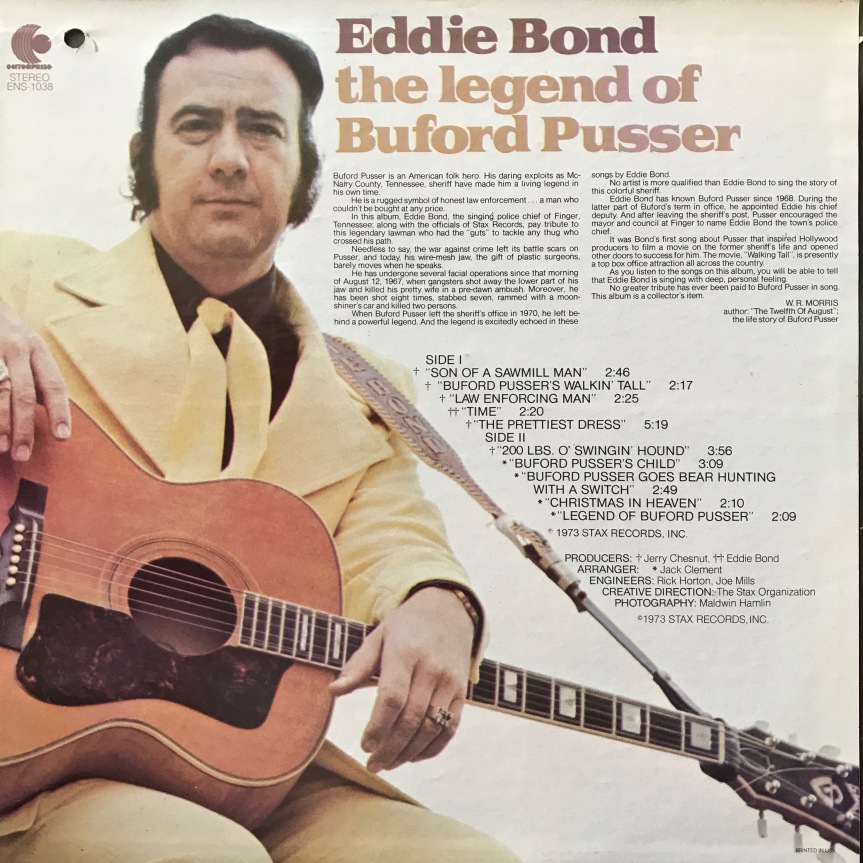
Sunday listening: “The Legend of Buford Pusser”

IMG_2150IMG_2153

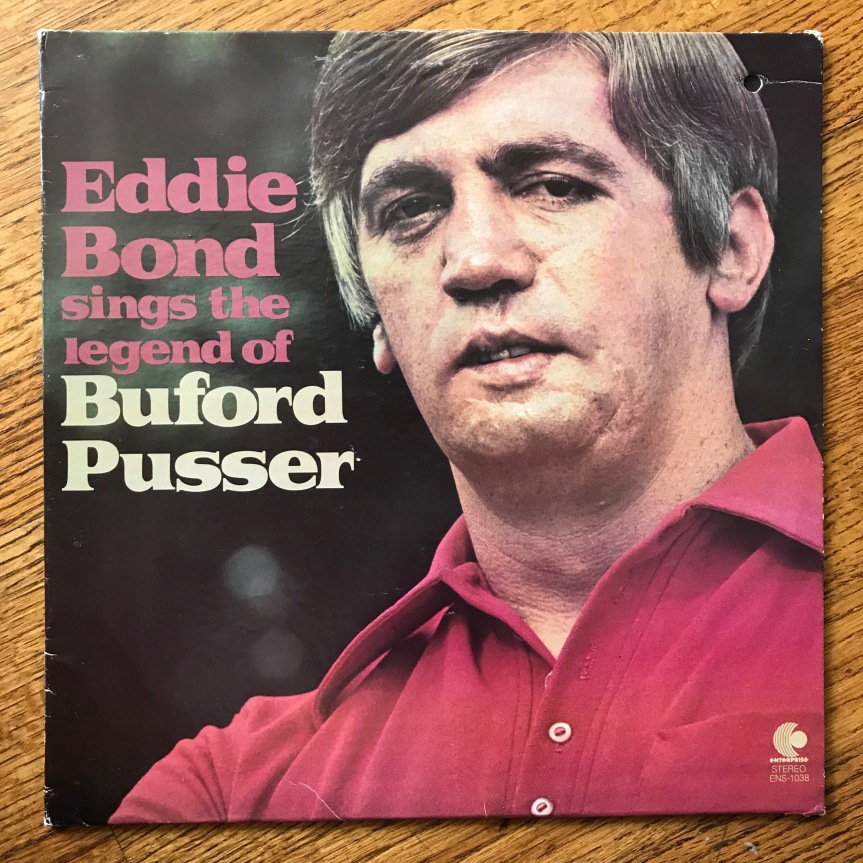
This Sunday’s listening, purchased a few days ago at Secondhand Sam’s in Jasper, Alabama: Eddie Bond Sings The Legend of Buford Pusser, 10 songs on the life & death of the McNairy County, Tennessee, sheriff known for waging war against organized crime, prostitution and moonshine in south Tennessee. This album’s notes describe Pusser as “an American folk hero” and “rugged symbol of honest law enforcement”; he carried a huge wooden stick as all-purpose weapon and was famous (his memory still celebrated by many admirers today) for his relentless, ruthless approach to the law. Pusser made lots of enemies and was subject to a few assassination attempts. His wife was killed in 1967 in an ambush meant for the lawman; Pusser survived the attack, his mangled jaw put back together with wire mesh.

Eddie Bond was a one-time rockabilly singer who’d also served as Buford Pusser’s deputy — and who, at the time of this recording, was “the singing police chief of Finger, Tennessee” (a job, by the way, that Pusser helped him land). Eddie Bond Sings The Legend of Buford Pusser was produced by “Cowboy” Jack Clement and released in 1973 on a subsidiary of the STAX record label(!!); its release helped inspire Walking Tall, a movie about Pusser, which led to two sequels and a short-lived TV series. (A 2004 remake starred Dwayne “The Rock” Johnson in the Pusser role but gave the sheriff a new name and backstory.)

I’ve got The Legend of Buford Pusser on the turntable right now, and it’s something — all hero worship and country twang. In “Buford Pusser Goes Bear Hunting With a Switch” (a mouthful of a song title) the sheriff gets full-scale tall-tale treatment:

On the day that he was borned he weighed 42 pounds
He jumped out of bed and he stomped on the ground
He said, Listen here, doc, don’t hit me no more
If you do, you’re going to pick yourself off of the floor

He’s Buford Pusser! He goes bear-hunting with a switch
Ain’t a moonshiner in the county that big Buford can’t get

And so on.

A few other songwriters have remembered Pusser less favorably. Jimmy Buffett had a drunken run-in with the sheriff, himself — Pusser allegedly pummeled him and pulled a tuft of hair out of his head, after Buffett walked across the hood of Pusser’s car in golf shoes — and he alludes to the incident in a couple of songs, “Semi-True Stories” and “Presents to Send You.” The Drive-By Truckers devote two angry songs of their own to Pusser on their 2004 album, The Dirty South, both looking at the man from the vantage point of those who faced his brutal brand of justice. In “The Boys from Alabama,” singer Patterson Hood promises to tell “the other side” of the Pusser story, and in “The Buford Stick” he sings:

Now Sheriff Buford Pusser’s gotten too big for his britches
With his book reviews and movie deals

Down at the car lot making public appearances
For breaking up our homes and stills
I know he likes to brag how he wrestled a bear
But I knew him from the funeral home
Ask him for a warrant, he’ll say “I keep it in my shoe”

That son of a bitch has got to go

Pusser had already laid down his badge by the time his legend really took off outside McNairy County. In 1970, term limits prevented him from running again as sheriff; when he did run in 1972, he was defeated, even as his national celebrity was on the rise. Eddie Bond’s album and the first Walking Tall both appeared in 1973, and for a little while Pusser rubbed shoulders with the rich, famous, and powerful. On August 21 of 1974, he made a deal to play himself in the next movie about him, this one to be titled just Buford; he was feeling good, and maybe a little drunk, as he drove to his home in Adamsville, Tennessee. His bright red, custom Corvette, paid for with Walking Tall money, hit an embankment at high speed, just four miles from home, and Buford Pusser was thrown from his vehicle. He was killed on the spot. Rumors of foul play abounded. The legend grew.

And what of Eddie Bond? Poor fellow! When he died in 2013, the first sentence of his New York Times obituary emphasized what may now be his greatest claim to fame: that he “once told a teenage Elvis Presley that he would be better off driving a truck than trying to make it in music.” Well over half of the Times obituary is concerned with this story, which Bond had spent years trying to explain away; the rest of Eddie Bond’s life — including an unsuccessful run for sheriff of Shelby County, Tennessee — is presented as afterthought, condensed to a few sentences.

The Elvis story, for what it’s worth, goes like this: the unknown singer auditioned for Eddie Bond’s band in May of 1954. Bond was three years older than Elvis and already established in the Memphis music scene. He told the kid to keep his day job — but two months later, Elvis cut his first sides at Sun Records, and his truck-driving days were history.

A few years later, en route to Hollywood for the making of Jailhouse Rock, Elvis confided to a friend that Bond’s advice “broke my heart.” But, he said: “I wonder what Eddie Bond thinks now.”

P. S. If you like this sort of thing, you can support the endeavor by doing any of the following: follow this blog by signing up on the righthand side of this page (you’ll get about 2 posts a month in your email inbox); follow @lostchildradio on Instagram; or “like” my book and/or radio show on Facebook. You can purchase my book with Alabama jazzman “Doc” Adams online or at your local bookstore. Heartfelt thanks, sincerely, for any / all of the above.

HOT BOIL PNUTS (& other works in progress)

Three works in progress this week:

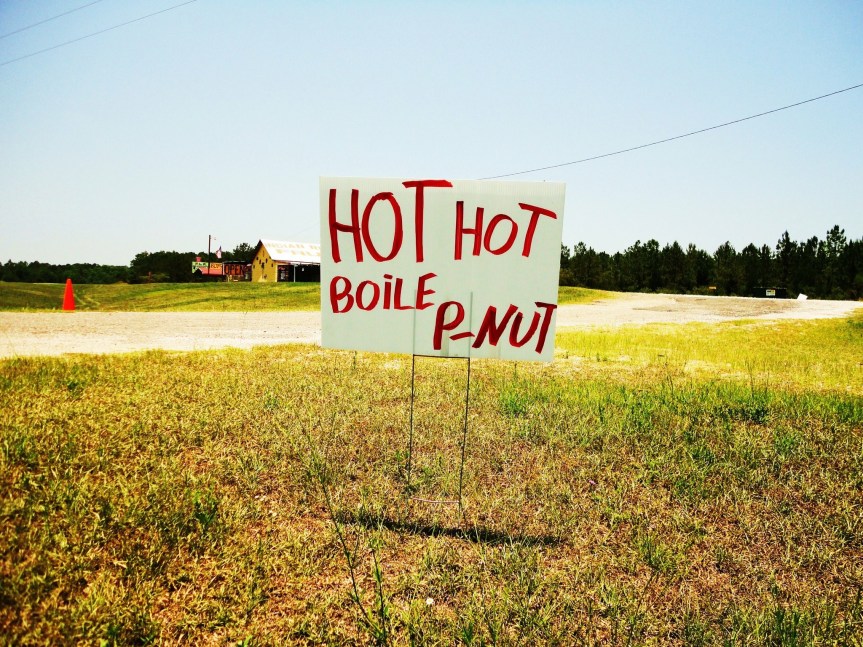
1. Fifteen or twenty years ago I started taking pictures of boiled peanut signs on the side of the road. Over the years I’ve developed a pretty sizable collection of these images, and for the rest of this summer (through sometime in early August, when a new school year starts), I’ll be posting one boiled peanut photo a day on Instagram. If you’re an Instagrammer, take a moment to follow @lostchildradio to stay abreast of the progress.

I’m seven days into the series so far. Here’s some of what’s up there already.


IMG_2057IMG_2083

2. This week I’ve been trying to reorganize one of the most important sections of my book on Birmingham jazz. A stack of index cards has proven useful. Below is my reshuffling of a chapter on John T. “Fess” Whatley, Birmingham’s extraordinary and influential “Maker of Musicians.” (The notecards might be cryptic to you, but know that they represent progress — at the bottom of today’s post, I’ll post a few paragraphs from this chapter.)

IMG_2096

IMG_2101

3. Yesterday I was asked to give a talk in Tuscaloosa on the late Sumter County, Alabama, singer Vera Hall. Here is a recording of Vera Hall singing. And here’s Moby’s famous 1999 remix of one of her songs, “Trouble So Hard” (reimagined by Moby as “Natural Blues”). And here are a few illustrations from my talk…

First a drawing I made of Vera Hall:

IMG_2081

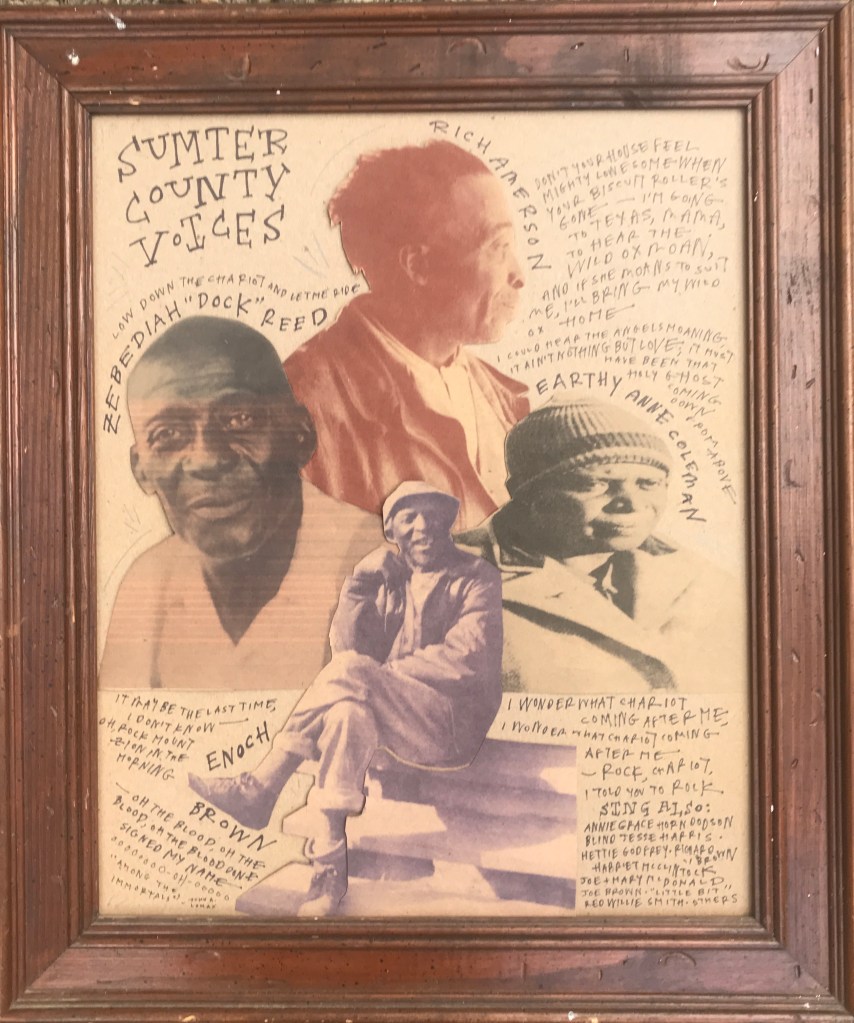
Not totally finished, but here’s a tribute to other Sumter County singers, part of my “Book of Ancestors” project, described in a recent post:

IMG_2112

And here’s Ruby Pickens Tartt, who introduced the singers above to many visiting folklorists and writers, including the father and son John and Alan Lomax. (Anticipating the abundance of T‘s in “Tartt” I got carried away with the letter R and added an unnecessary extra. Oh well; I will try her again another time.)

IMG_2109 2

Here’s, lastly, what Vera looks like on the big screen:

IMG_2136

Thanks for reading. Finally, if you’re curious to read some of the Fess Whatley chapter outlined above, here are a few quick paragraphs. My book explores the ways in which Birmingham’s black community, through much of the 20th century, fostered an overlooked but significant jazz tradition. The schoolteacher-bandleader John T. “Fess” Whatley was at the heart of this culture, sending scores of his pupils and band members out into the larger worlds of jazz. A previous chapter describes Fess Whatley’s own musical roots and his rise to prominence in Birmingham’s segregated school system; the chapter outlined above delves deeper into his story, exploring the unique nature of his influence and the creation of his larger-than-life persona. Here’s an excerpt:

Whatley’s corporal reprimands were legendary. Fess would count off a tune, recalled trumpeter Amos Gordon, “One, two, three, four”—and “if you didn’t come in, he’d crack you across the head with a stick.” J. L. Lowe, perhaps the most avid of all Whatley’s admirers, remembered the ritual of Fess’s rappings: “He hit me three times a day,” Lowe said. “One was to start me off, the second lick was if there was a mistake, and the third lick meant ‘that’s enough.’” Fess was known even to strike his students on stage, mid-concert, if they’d played a wrong note. In the town of Gadsden, about sixty miles east of Birmingham, trumpeter Tommy Stewart experienced Whatley’s disciplinary style when his mother arranged for a private lesson. “My mama knew that I needed to have some contact with him,” Stewart said, “because that was the man who had developed so many [musicians] already. When I first came in, he hit me on my knuckles—I hadn’t even played. He said, ‘I know, Mr. Stewart, I’m going to have to get you for something, so hold your hand out.’ Bap! He hit me on the knuckles and told me to start playing.”

Other Whatley stories were embedded in Stewart’s family history. Years ago, Stewart’s grandfather had started a community band and, the story goes, “they got Fess to come down here once a month to help develop the band. When Fess walked in, he said, ‘I want to hear some music. I don’t want any mistakes’—and pulled out his .45!” Whatley kept the gun visible on the table throughout the rehearsal. “He carried a .45 with him all the time,’ Stewart laughed. “Never shot nobody, but he always kept everybody intimidated.”

In Fess Whatley’s band, explained Sammy Lowe, “everything was done in a businesslike way.” For starters, everyone in the band had his jobs: “One guy would set up the music stands, another would put the music out—and by the way, each fellow had to keep his book in numerical order or risk a fine—other members would help the drummer set up, and so on down the line.” Most importantly: “According to Fess, there was no excuse … I repeat: no excuse but death … to be late.” For Whatley, time was everything. Gigs began—and, just as important, no matter how well the night was going, no matter how eager the audience, gigs ended—on the precise minute advertised: with a bit of “Home Sweet Home” Fess and the band signaled the end of each evening’s performance, ushering dancers out the door and back to their sweet homes. Tardiness was the greatest sin, a preoccupation remembered by all Fess Whatley’s players: for every sixty seconds a player arrived late, he’d incur a separate fine. “One night,” remembered Sammy Lowe, “we were to leave for a gig at 7:00 P.M. At exactly 7:00 PM Fess said, ‘Let’s ride.’ We started off just in time to see a band member rushing around the corner. Fess kept on driving, refusing to wait for him. That night Fess fined him for being fifteen seconds late.”

Years after Fess’s death, his old students and disciples still referred to what they called “Whatley Time”: that strict adherence to the clock the bandsman had ingrained in his musicians. “If I had an appointment with the devil himself,” he’d told them, “I’d get there fifteen minutes early—to find out what in hell he wanted!” Fess seemed even to move with the built-in timing of a human metronome. “Even the way he walked,” said J. L. Lowe: “it was with rhythm in his mind. One, two, three, four. It was always like that with him.” Like a lot of Whatley’s musicians, J. L.’s brother Sammy insisted late in life that the Whatley training instilled in him an unbending sense of punctuality: after a long and prolific career he could count on one hand the number of times he’d arrived anyplace late. For the Lowes and others, Whatley Time, reinforced by knuckle-raps and fines, became an instinct.

Okay; all for now. More later. Happy Saturday to you.

Voices Unearthed (some great news)

I’m really excited.

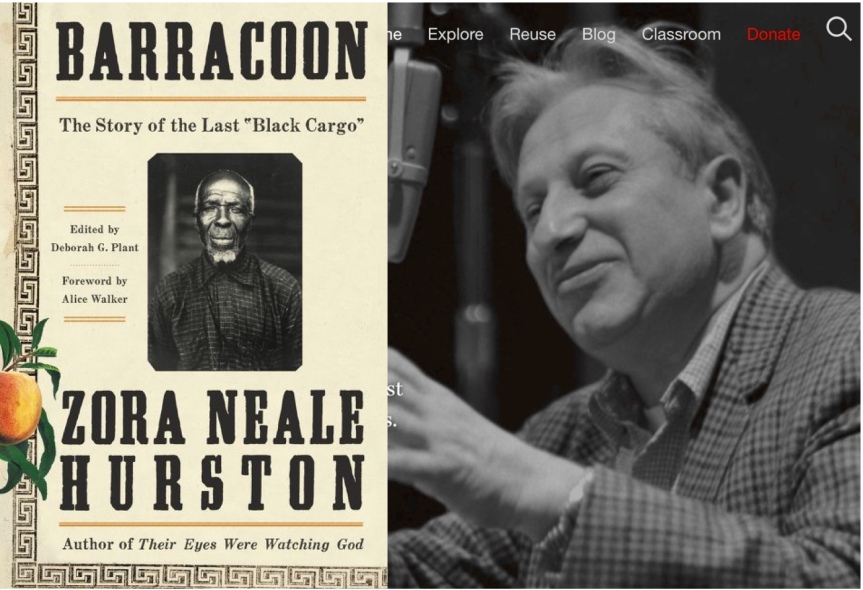
This May is huge for lovers of oral history, like me–and for anyone with an interest in American culture, identity, literature, music, history, social movements, or art–thanks to a couple of major releases, out now. First, a previously unpublished book from Zora Neale Hurston–Barracoon, the true story of the last survivor of the last American slave ship–finally hit the stands on May 8. And today(!!) the Studs Terkel Radio Archive has unleashed unto the world a new website with nearly 10,000 hours of radio interviews from 45 years of Terkel’s legendary Chicago radio show.

I am beside myself, and can’t wait to dig into it all.

Hurston and Terkel were two of the first writers I fell in love with, and there aren’t many artists whose voices and visions have made a larger impact on my own way of understanding the world. Both of them were devoted to sharing the stories of “ordinary” people,  believing fiercely in the epic quality of everyday lives. Both advocated a grassroots, street-corner, front-porch, backstage approach to history, centering on those women and men who might otherwise be invisible, voiceless, marginalized, or forgotten. Both were champions of the spoken (and sung) word, the power of the human voice, and the hidden poetries of our day-to-day talk. And while both celebrated humanity in all its forms, with an eye always on the universal, both were uniquely and utterly American. A sense of place pervades their work–for Hurston it’s her native South (particularly Eatonville, Florida) and her adopted Harlem, while for Terkel it’s Chicago–but both artists capture in the sweep of their work a wide range of American experience, complete with all the complexities and contradictions, heartbreaks, struggles and beauty that that experience entails.
zora studs
Barracoon: The Story of the Last “Black Cargo” tells the story of Olalule Kossola–or, as he was called in America, Cudjo Lewis. Born in West Dahomey, Africa (today’s Benin),  Kossola was kidnapped in 1860 and illegally smuggled to America aboard the Clotilda, the last of the trans-Atlantic slave ships. He was enslaved for five and a half years on a south Alabama plantation; after Emancipation he and other survivors of the Clotilda established their own, independent community just north of Mobile, a place they called Africatown. Hurston traveled there in 1927 and 1928, and over the course of multiple visits she recorded Kossola’s story in his own words. Hurston was unable in her own lifetime to find a publisher for the book that resulted, and all these years later her original manuscript (edited by Hurston scholar Deborah G. Plant) is finally seeing the light of day. It’s a slim book, but a major contribution both to the historical record and to the literary canon.

The bulk of Barracoon presents Kossola’s story in his own words, an approach Hurston believed was essential for the project: contemporary publishers urged her to rewrite the story in her own voice but Hurston refused, insisting that the narrative belonged to Kossola, in his terms. Hurston’s voice is itself a crucial piece of the work, though, as she frames Kossola’s storytelling with brief descriptions of her visits to his home. They eat peaches or watermelons or crabs together and talk; he tends to his garden; she drives him here or there or offers him a hand with his day’s work. Some days he is gregarious and warm; other conversations are tense and brief. Hurston observes the awful weight of heartbreak and homesickness that shapes Kossola’s life, and she honors his need, some days, not to talk at all. I’m only midway through the book, and already Barracoon is proving invaluable for its presentation of Kossola’s unique voice and experience–from Africa through slavery to Emancipation and beyond–but it’s a treasure too for anyone with an interest in Hurston herself: a creative force whose mission, process, and personality inform all aspects of this book.

Then there is Studs. Over the course of a long career he published numerous books of oral history, most famously the landmark Working (subtitle: People Talk About What They Do All Day and How They Feel About What They Do)–a book which I first encountered as a teenager and which, like Hurston’s Mules and Men, had a huge impact on the sorts of things I’d one day want to write about myself. In other books Terkel tackled the subjects of race, death, class, music, the movies, the Great Depression, World War II, the American Dream, social justice, and more. But alongside all those remarkable books he was building an equally impressive body of work through his radio talk show, broadcasting for nearly half a century on Chicago station WFMT. Nearly 2,000(!) hours of these broadcasts are now available at the Studs Terkel Radio Archive, which unveiled its new website today–and which promises many more hundreds of hours to come. The wealth of conversations here is staggering: Terkel talks to civil rights leaders, musicians, authors, historians, filmmakers, anthropologists, scientists, actors, activists, and a whole host of other culture makers. As in his books, he shares the voices of the unknown and unsung; but here he also speaks with an enormous cast of iconic personalities, engaging in conversation some of the most influential figures of the last century. I’m looking forward to listening to interviews with (for starters) Muhammad Ali, Dizzy Gillespie, and my cousins Cliff and Virginia Durr. Then there’s the 1965 interview with Tom Wolfe, who died yesterday; in it Wolfe discusses his just-published first book, The Kandy-Kolored Tangerine Flake Streamline Baby. Additional interviews are still being added: I hope that soon we’ll be able to hear Terkel’s talks with Martin Luther King, Langston Hughes, Pete Seeger, Mahalia Jackson, Big Bill Broonzy, and others. There are, of course, lots of musicians here: like Hurston, Terkel had a deep love for music–in particular for blues, jazz, and folk song–and his work, like Hurston’s, is informed at every step by music. But take a look around the archive, yourself, and see what jumps out. There is plenty here to explore.

For years I’ve wanted somebody to write a good biography of Studs Terkel; of all the unborn books waiting to be written, this is the one I’m most eagerly awaiting. Hopefully someone out there will get on that soon. In the meantime, we can keep ourselves busy and inspired with this incredible archive, and with Hurston’s Barracoon. I’m grateful to every person who had a hand in bringing either of these projects into the world.

I think pretty soon it’ll be hard to imagine how we ever managed without them.

Jug Bands!

“Wake up, mama, hear your rooster crow. One at your window, one at your door.”
— The Birmingham Jug Band,
“Wild Cat Squawl,” “Getting Ready for Trial,” and “Giving it Away” (rec. 1930)

A couple of Saturdays ago Birmingham Mountain Radio was beset by technical glitches, and my radio show hit the airwaves late — and even then in fits and starts. Because I didn’t want any of the music to get lost (I’d devoted the hour to one of my longest-running musical loves, the jug bands of the 1920s and ’30s) I cleaned up the broadcast and, while I was at it, added an extra half hour of music and history. I’ve uploaded it to the internet, here, so you can hear it anytime. Check it out.

As I explain in more detail on the show, the jug band craze of the ’20s and ’30s had its real start in Louisville before it found its greatest expression in Memphis. Other communities across the South could boast their own jug bands, and a handful of those bands made records. The extended version of Saturday’s show includes a couple of tunes from our own hometown group, The Birmingham Jug Band. I didn’t say much about this group on the air, so I thought I’d fill in a few blanks here.

One of the band’s members was Bogus Blind Ben Covington (Bogus Blind Ben, because he wasn’t really blind–how about that?), a banjo player and medicine show entertainer who also recorded a small handful of sides as a soloist. Mississippi bluesman Big Joe Williams claimed to have played in the group and cited Bessemer, Alabama, harmonica player Jaybird Coleman among the band’s other members; blues scholars have debated the accuracy of that claim ever since, and I won’t wade into it here. The remaining players come to us only as a string of evocative, shadowy nicknames: there was “Dr. Scott” and “One-Armed Dave,” a jug blower called “Honeycup,” and a washboard player known simply as “New Orleans Slide.” (How about that?)

An aside: right after I graduated from college, I got my first writing job as a freelancer for the All Music Guide, contributing artist bios and album reviews that still circulate, for better or worse, around the internet today. If you seek information online about the Birmingham Jug Band, you’ll end up looking at the couple of paragraphs I wrote a couple of decades ago. I learned a good deal while writing all those old bios, but I’m embarrassed now by a fair amount of the writing. Oh, well: I just reread the Birmingham Jug Band bio and it’s not so bad.

Here’s some of what it says:

“Of all the jug bands of the ’20s and ’30s, the Birmingham band had one of the most distinctive sounds on record, though their repertoire was significantly less diverse than that of groups like the Memphis Jug Band or Cannon’s Jug Stompers. Probably the only full jug band from south of Memphis to record, the group had a more rural sound than its contemporaries, reflecting the aesthetics of the country string band as much as the popular jug band. The group’s eight recordings are characterized by a prominent lead mandolin and equally prominent harmonica; gruff, heavy vocals; and a throbbing rhythm enforced largely by the insistently pounding jug. Also recording in the same Atlanta studio that day was King David’s Jug Band, another little-documented group; together, these two outfits produced some of the liveliest and most intriguing records from the height of the jug band era.”

I will certainly stand by that last statement: these are great records, rowdy and raucous and entirely infectious.

(A further aside: for the jug band bio I was awarded fifteen dollars and a byline. I was living in Asheville, North Carolina, at the time and waiting tables for a regional restaurant chain that described itself as “an upscale Applebee’s.” My income was supplemented with a few other money-making schemes, besides the All Music gig: I substitute taught, delivered the Yellow Pages, and put new strings on guitars and banjos at a bluegrass-minded music store. With two other friends I produced one issue of an oral history magazine, before we all moved on to other places and projects. For fifty dollars a month I rolled the trash cans at my apartment building to the street twice a week, and for another fifty I did the same thing at another building nearby. It was almost always sunny and I rarely thought about the future.)

But this was supposed to be a post about jug bands. I’ll leave it at this: I have been in love with jug bands for a long, long time, ever since I first discovered them in high school on a couple of Folkways records. Saturday before last I was lucky enough, even with the technical glitches, to play a bunch of those old songs over the radio. In case you missed it, or didn’t get enough, you can now stream the extended mix anytime your heart desires.

So. Give it a listen. Be well. Thanks.

P. S. I just remembered something else I wrote about the Birmingham Jug Band (I’ve spent a lot of time over the years contemplating this mostly forgotten band): I included them and their instrumental breakdown, the “Birmingham Blues,” in my little collection of “Thirty Birmingham Songs,” published in 2011. This is some of what I said then:

“Almost half of the songs recorded by the Birmingham group consist of essentially the same melody—their “Birmingham Blues” closely echoes their “German Blues,” “Giving it Away,” “Getting Ready for Trial,” and others—but each time and with some variation the band proves it can play the hell out of that particular tune. Other instrumental odes to the city would be recorded in later years … but Birmingham has never sounded better, freer, or wilder than in it does in this blues. (Anyone out there, incidentally, who believes the worn stereotype that the music of the blues is a depressive and mournful thing had better listen to this record and get right.)”

I’ll only add to that that I find all the repetition in this band’s repertoire totally endearing. The lyric at the top of this post appears in three of their eight recordings, running as a refrain through their work. “Wake up mama, hear your rooster crow–one at your window, one at your door.”

You have to admit, it’s a good line.

Girl Scouts, Lost Heroes, & the Soul of Man

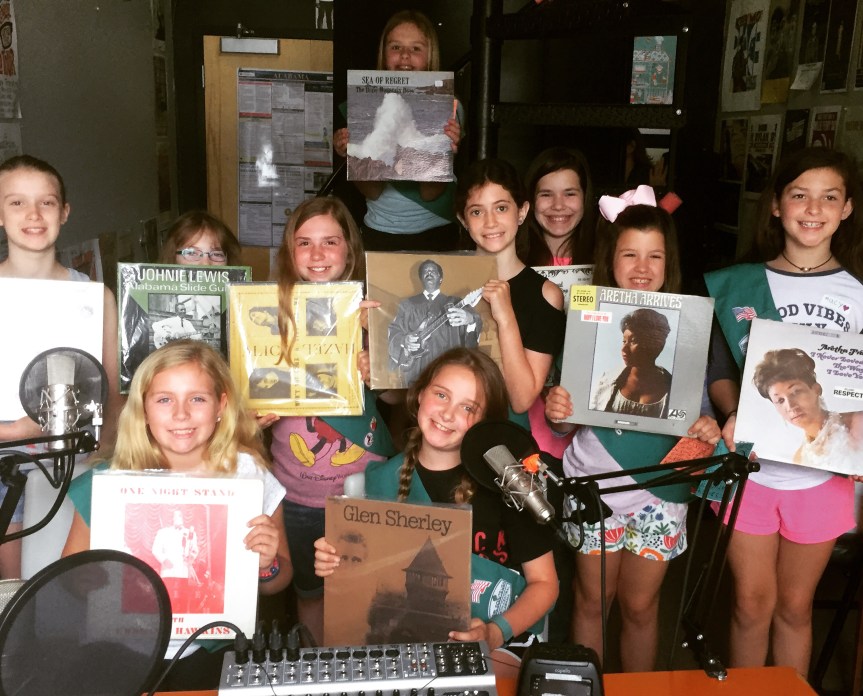
One Saturday last April my radio show was visited by a troupe of Girl Scouts; they were working on their music badges, and one of the moms (my friend Marnie) asked me to talk to them about radio and share a little music history. I decided to focus on some of the Alabama music that I play on the show, and as a kind of handout I made them a little zine they could take home: “The Girl Scouts’ Guide to Alabama Music Heroes, Volume 1.”

The girls and their moms and a few dads came, and we talked about Alabama music and zines and radio. I recorded them singing a couple of songs, one of which I played over the airwaves a week later. “Make new friends,” the girls sang, “but keep the old, one is silver and the other’s gold.” After the show, the troupe went on to make new friends at Seasick Records for Record Store Day, in further pursuit of their music badges.

IMG_3971
Troupe 30672 visits The Lost Child radio show, 2017

Originally there only existed about a dozen copies of the zine, and each was the property of a Girl Scout. But last month, for the opening of an art / history / photo show I put together at Crestwood Coffee, I decided to make some more copies for the general public, giving the zine its worldwide, non-Scout debut. If you want one, you can pick up a copy at the coffeeshop or at The Jaybird in Birmingham, or you can email me for one (burgin@bhammountainradio.com). They’re $3 each (plus shipping), or just $1 for Girl Scouts.

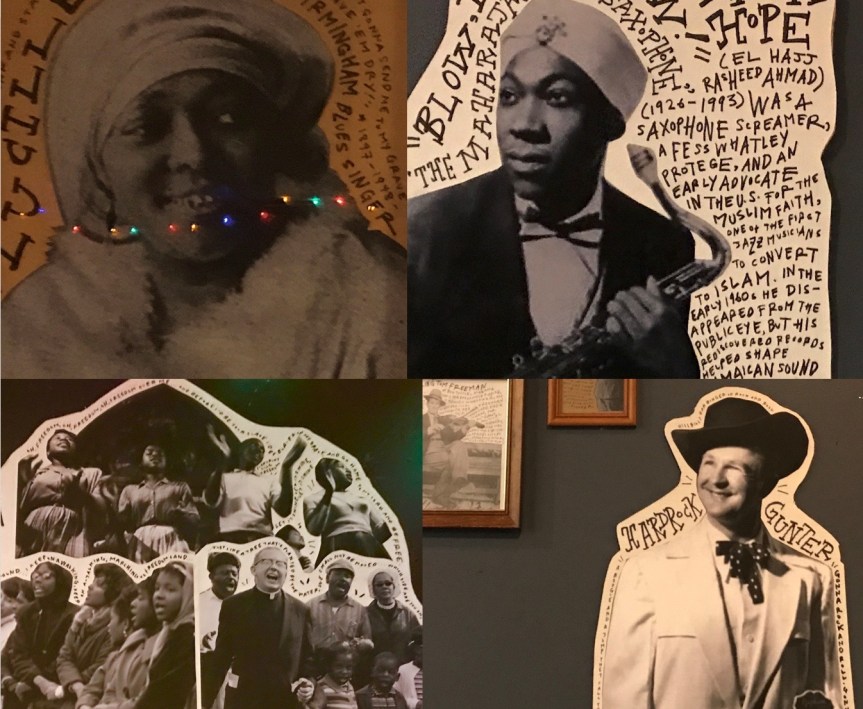
The show on the coffeeshop walls, both its content and design, was actually inspired by the original Girl Scout zine. “What is the Soul of Man?: The Roots of Alabama Music” highlights many of the state’s music heroes and traditions, with historic photos and original text. Included are more than a few forgotten heroes a handful of legends, all of whom made substantial marks on their musical communities and culture. It’s a history that incorporates jazz pioneers, old-time fiddlers, blues women, country brother duets, civil rights foot soldiers, rural singers, rock-and-roll harbingers, and more. The show is only up for another couple of days, through Tuesday, March 6, so I invite you to come out to the coffeeshop before it closes and check it out.

IMG_0974

IMG_1212

After I take this down I think I’ll continue expanding it for some other location. There are a few segments I meant to get to before it went up, but never did — Muscle Shoals soul, Sacred Harp singing, Gennett Records’ 1927 Birmingham sessions, and so on — so hopefully there’ll be more to come, somewhere down the line.

In the meantime, come check out the current installation while you can. Hopefully you’ll find some history there that’s news to you.

“Have you ever heard any music like this before?”

FullSizeRender-1
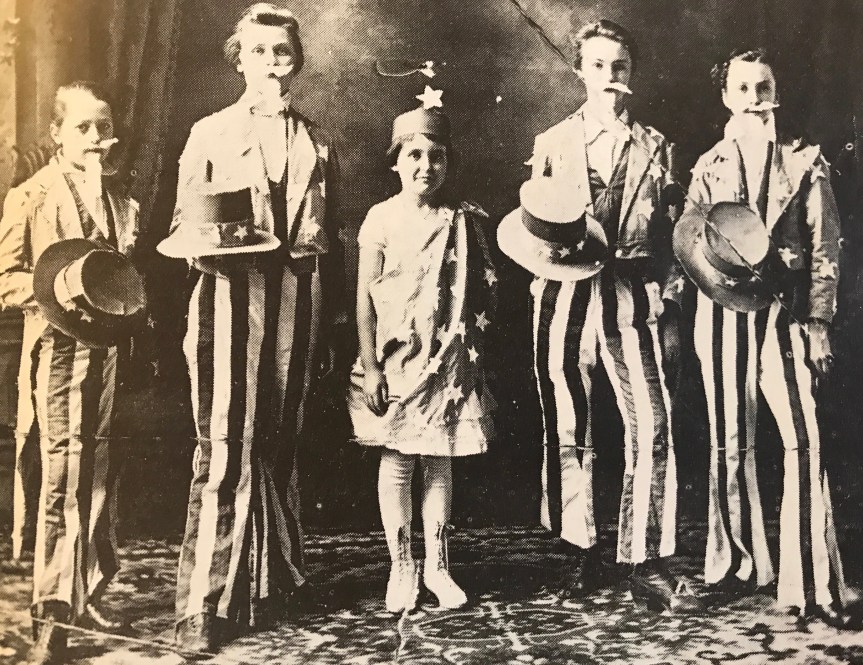
Kids, Collinsville, Alabama, c. 1898.

I spent a couple of hours today at the library, working on a project I’ll fill you in on later. I didn’t find a whole lot of what I went to the library looking for, but I did stumble into this happy tangent: photos of music and musicians from the history of Alabama’s DeKalb County.

All of these images come from various installments of the DeKalb Legend, a publication from Landmarks of DeKalb County, a nonprofit devoted to historic preservation. Landmarks put out a bunch of these books in the ’70s, compiling photos that stretch back into the 19th century. Included are all sorts of scenes from daily life, spanning much of the region’s history — but the images that got my attention, one or two of them every hundred or so pages, were those of the county’s musicians and singers. The Louvin Brothers grew up in DeKalb County; so did members of the band Alabama. But these scattered photographs give some insight into the everyday music of everyday people, a glimpse into a narrow geography’s wide-ranging musical culture.

It’s an incomplete record, of course, and we’re left to imagine the sounds themselves. But a dozen such photos from every county in the country would open up to us a history we’ve, at best, hardly heard.

Take a look:

IMG_1161
Photograph captions in the DeKalb Legend offer some details but leave others to the imagination. Here, “two unidentified ladies serenade Jesse B. (Peter) Horton, Jr. about 1902.” Beyond that the Legend simply adds: “Horton died in 1904.”

IMG_1172
“Joe Shields and his singing group at DeShields School — 1910.”

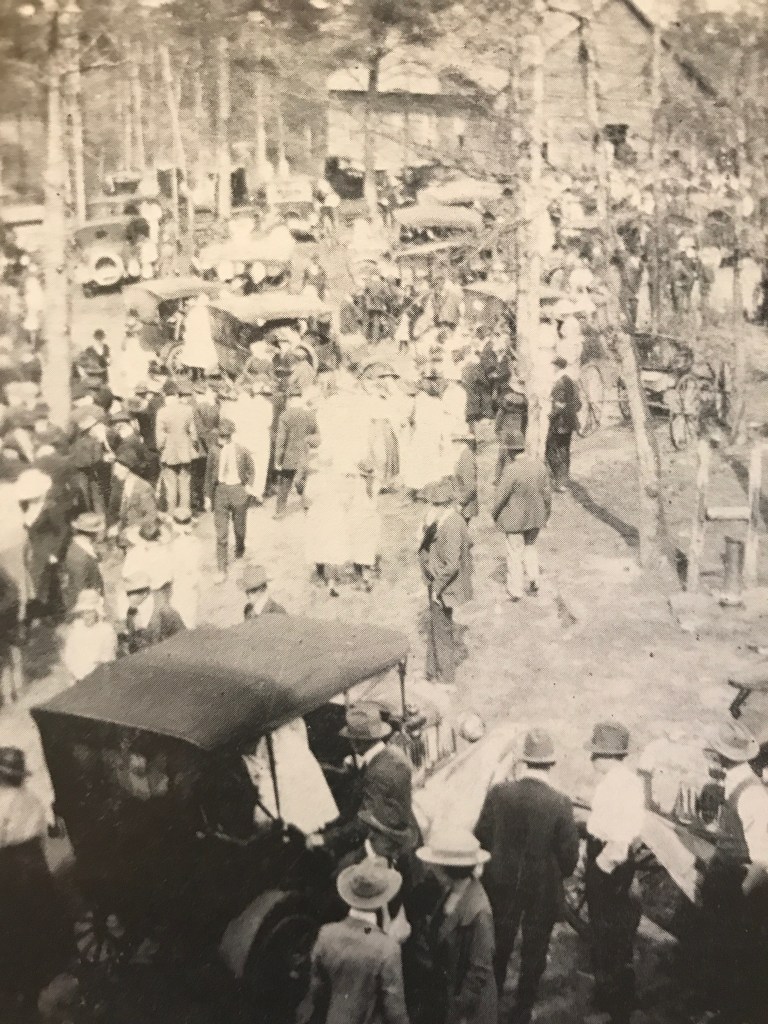
IMG_1146A blurry image from Chavies, Alabama, c. 1915: a big crowd for the “First Sunday in May singing.”
IMG_1168
A “patriotic musical” from 1918.

IMG_1170DeKalb County High School band, 1927. F. S. Thacker, band director, at right.
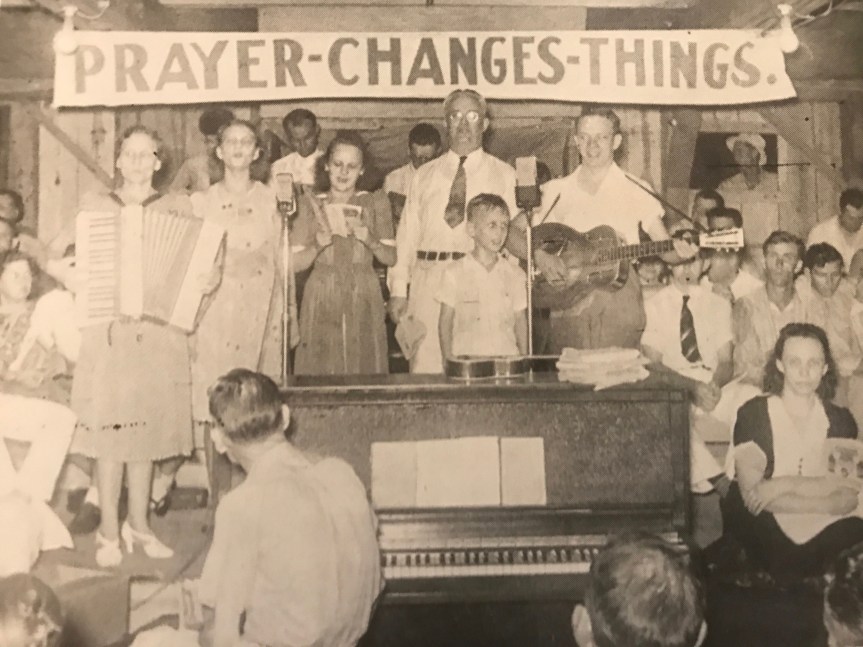
IMG_1140“Prayer Changes Things”: a scene from the Monroe Tabernacle, a “non denominational church built by Mrs. J. P. Monroe,” pictured here sometime in the 1930s. There’s a lot to look at in this one. I’m interested in the man outside, seen through the window, and in the moments (not pictured) when the boy, more or less center, picks up the small guitar in front of him. I’m curious too about Mrs. J. P. Monroe.
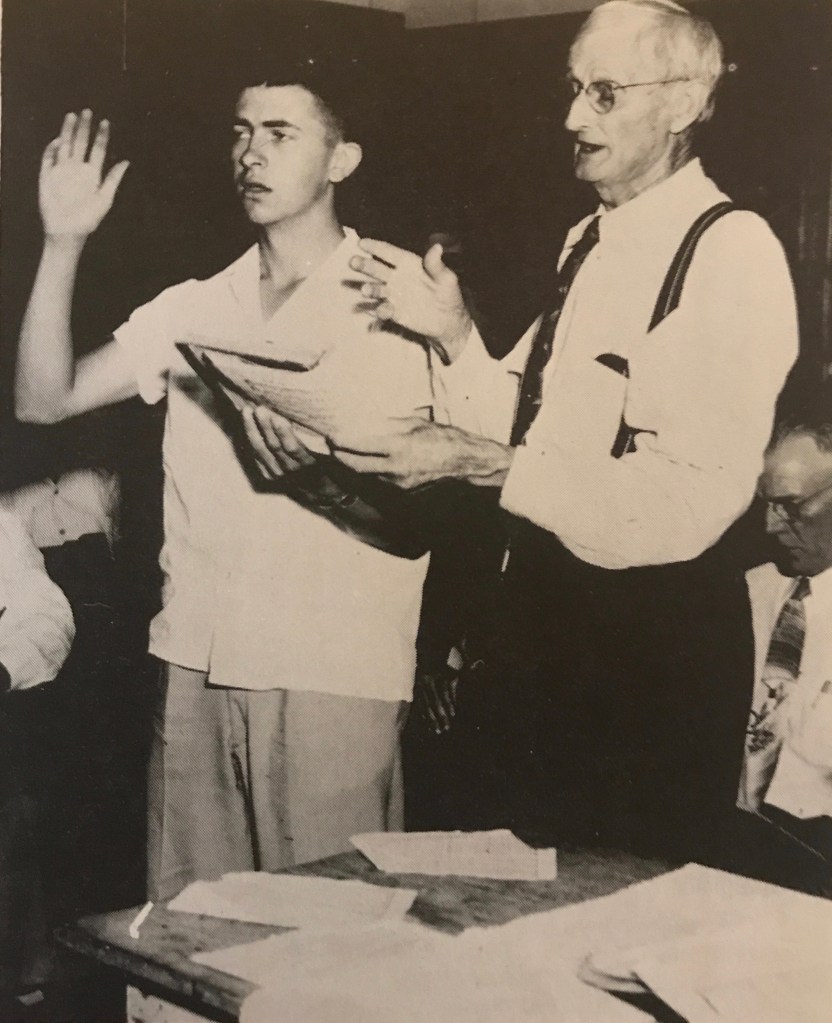
IMG_1129Sacred Harp singers, Mt. Herman Baptist Church, 1949. Leading the singing are Jack Stiefel and Riley Garrett: “the young and the old,” the caption says.
IMG_1155
“An old tradition: fox hunters dancing in the streets of Fort Payne about 1950.”

IMG_1159
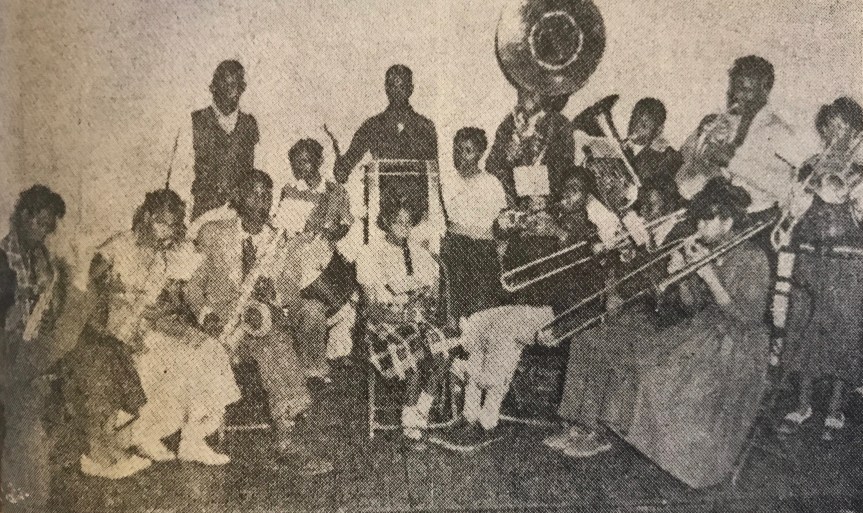
“Newly formed band at Frederick Douglass High School in 1952,” directed by Lillie L. Trammell.

IMG_1151A political rally in 1956, Williams Avenue School, Fort Payne. Adlai Stevenson for President: “For All Of You.”
FullSizeRender
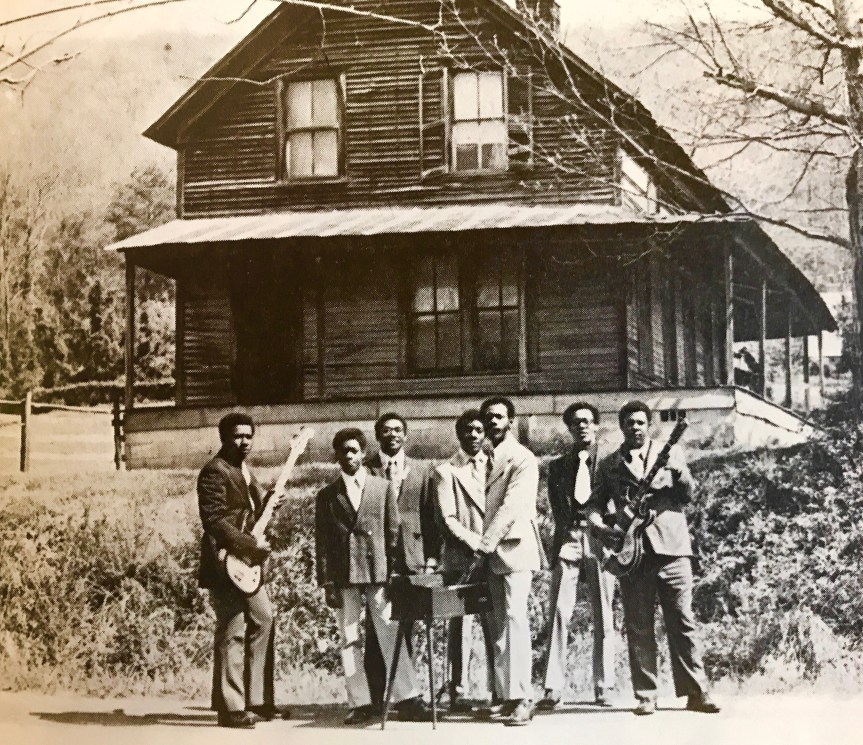
“Musicians who specialize in modern spiritual music” — posed in front of a historic home in Fort Payne, sometime (undated) in the ’60s or ’70s.

And speaking of the modern — check out teenage rockers the Viscounts, also from Fort Payne, playing the “weekly hootenanny” at the DeKalb Theatre, 1963:
IMG_0154
The second Viscount from the left, by the way, is Jeff Cook, age thirteen; later he and a couple of cousins would form the band Alabama, a group clearly steeped as much in rock and roll as in country.

I’m going to leave you with this: a record the Viscounts (or VT-Counts) cut in 1964, “(This Is) Our Generation” — a 1960s Alabama teenage manifesto I’ve become kind of obsessed with. Give it a listen. I’ve transcribed the text, as I hear it, underneath the link.

Greetings and salutations
And all words indicative to a hearty welcome,
My celestial friends
This is Sweet Daddy Whitley
Talking to you cats and chicks about our generation.
Have you ever heard any music like this before?
This is our generation.
We made it what it is today.
Talk about the good old times
There were no good old times
This is it
There’s no need to wait around
This is it
This is our generation.
And his soul cries out: let me hear some more of that guitar

[solo]

That was the high priest, Jeff Cook, on lead guitar
And in the background you can hear bassman Bailey
The high
esteemed
bassman
And along with him is
Rhythm Ray
the DJ
on rhythm guitar
This age where rockets, satellites
Hot rods
Drag strips

And his soul cries out,
This is our generation

As I count the (ways of life? waves of rye??)
One
Two
They cry out, let me hear some more of that swinging sound

[solo]

That’s soul music
It comes from the heart
And soul
They think they had music a long time ago
This is our music
And before I close I would like to remind you
This is our generation.
This is it.
Live it up.
Smile a while.

*

That’s as good a place as any, I guess, to end this post:

This is it. Live it up. Smile a while.

Thanks for reading.

*

P.S. Okay, one last photo: I have to add that my favorite image of them all doesn’t take music as its subject, but I couldn’t leave it out. The image, which I included also at the top of this post, is labeled only “Collinsville School Boys, about 1898.” No explanation beyond that is offered, other than the boys’ names.
FullSizeRender-1They are, for the record, from left to right: Jesse Green, Victor Hall, Stanley Brindley, Charlie Hall, L. B. Nicholson, Carl Norwood, and Carl Brindley.
May they rest in peace.

Weekend Listening: Frantz Casseus’s “Haitian Dances”

In the 1940s, Frantz Casseus emigrated from Haiti to the U. S. because he wanted to meet Fats Waller.

That’s about as fine a reason to go someplace as I can imagine.

Sadly, the two men never met — Fats died about the time Casseus got to New York — but Casseus, a gifted classical guitarist and composer, went on to write and record some beautiful music of his own, adapting Haitian folk songs and styles to European classical traditions. “Frantz came here with the ambition to compose a distinctly Haitian classical guitar music,” wrote the guitarist Marc Ribot, for whom Casseus became a mentor. Casseus released three records on the Folkways label, creative and poignant works steeped in the rhythms, textures, and traditions of his native culture.

Here’s his 1954 album, Haitian Dances, my recommended listening for you on this cold weekend. It’s a short album: you can listen to it back-to-back-to-back, three times in a row, in about an hour. I’ve probably played it six or seven times already today.

P.S. It goes without saying. But thank God for Haiti and Haitians, and for Haitian-Americans — for Frantz Casseus, for example,  and the wonders he wrought in this country, his second home.

Frantz Casseus

Audio Archive: Frank “Doc” Adams remembers…

This weekend marks the five-year anniversary of the publication of my book with the great, much-beloved Alabama jazz hero, Dr. Frank Adams: a master performer, educator, family man, community icon, storyteller, and history-keeper known to many around here as “Doc.” Our book — Doc: The Story of a Birmingham Jazz Man — tells Frank Adams’s story in his own words, drawing from more than two years of weekly interviews.

To celebrate the anniversary of the book’s publication, I’ve uploaded the first few minutes of the first interview I conducted with Doc, from July of 2009 (in the recording below, I attribute this interview to 2002, not catching my verbal typo). At the time, I thought I’d write an article about Doc and about the history of Birmingham jazz community. Most of all I wanted to preserve some of this man’s remarkable story and storytelling for posterity; beyond my vague ideas for an article I didn’t have much of a plan. But this interview turned into many more interviews, which turned in turn into our book — and eight(!!) years later, I’m still very hard at work on the book that’s grown out of that one, a history of jazz in Birmingham, and of Birmingham in jazz.

Doc died two years after the publication of this book — three years ago this month. It’s a joy to hear his voice again in this recording. I remember vividly the day of this interview, sitting across from Doc in his office, engrossed in his stories and his spirit. I had no idea that we’d record ninety-something more of these interviews, no idea that this recording would become the opening pages of our book. I certainly did not anticipate the friendship and collaboration that would grow out of this first session. For that friendship, above all, I’ll be eternally grateful.

IMG_20140222_151410

When the book was finished, Doc constantly instructed me: “Keep the book in front of people.” He believed, and I believe, that it told an important story — a story about more than jazz, and more than Birmingham — and a story that ought to be widely shared. He didn’t want it collecting dust on book shelves but wanted it to pass through as many hands as it could. So I’ll remind you on its anniversary that’s it’s still available from Amazon — and right now available at the best price I’ve seen on it yet. Maybe your library has it, or maybe you can get your library to get it. If you’re in Birmingham, we’ve got it for sale at our new store, The Jaybird. However you get your hands around it, I hope you’ll spend some time with this book and with Doc.

Meanwhile, here’s how this whole thing started: Dr. Frank Adams sitting in his office, age 81, talking about his father and his brother and his mother, and about his first musical performance — a brothers’ duet of “The Old Rugged Cross,” performed for the congregation of Birmingham’s Metropolitan A. M. E. Zion Church.

“That,” he said, “sort of hooked me on music.”

Happy anniversary, Doc.

Remembering Ralph (1928-2017)

Tomorrow on The Lost Child: You might not know Ralph Lewis, but you should. The seventh son of a seventh son, he was born into the Great Depression in the mountains of Madison County, North Carolina. By five or six he was getting his hands around a mandolin and soon was sitting in with brothers Ervin and Blanco, The Lewis Brothers, a popular regional act. When Blanco was killed in WWII, Ralph joined Ervin as half of the brother duet, developing a following around Niagara Falls, New York. By the late forties Ralph had landed in Detroit, where an audience, made largely of displaced Southerners, packed out local venues to hear his mixing of mountain music tradition with a creative, propulsive, high-energy bent: “I was playing rock ‘n’ roll and didn’t know it,” he later said, suggesting an affinity with modern sounds that would last his whole life. He moved back to North Carolina and played in a number of bands before joining Bill Monroe’s Bluegrass Boys in 1974, at a peak in Monroe’s career. After touring the U.S., Japan, and Europe with Bill Monroe, Ralph returned to Madison County, choosing to develop a band with his young sons, Marty and Don.

I first encountered Ralph, Marty, and Don when I moved to Asheville, NC, in the year 2000. Their band, The Sons of Ralph (Featuring Ralph) was an enormous local favorite, especially at Jack of the Wood, the downtown stage they made their headquarters. As he always had, Ralph mingled his family’s mountain music traditions with a wide-open, innovative embrace of influences, and with Marty and Don at his side Ralph was more than ever pushing the boundaries of bluegrass–really forgoing boundaries altogether–and mixing in an eclectic, electric range of sounds from rock and roll to reggae to Cajun music and beyond.

Ralph remained a fixture of the area’s musical culture and scene until his death last Saturday at the age of 89. I am grateful for the opportunities I got to see him and Marty and Don and their band, live on stage–grateful for the opportunities to participate in a community and family that extended beyond the stage to every person in the room.

I’m going to do my best tomorrow to play/pay tribute to Ralph on the radio. I’ll play a bunch of Sons of Ralph songs, and a recording or two of Ralph playing with Bill Monroe in Japan. I’ll play a few excerpts from an interview I recorded with Ralph in 2002. I will leave some things out, I’m sure, but it will be a heartfelt tribute anyway to a musician and a man I’ll always admire. You should tune in.

ralph

The Lost Child airs Saturday morning from 9 to 10, Central, on Birmingham Mountain Radio: 107.3 in Birmingham, Alabama; 97.5 in Tuscaloosa; and streaming online every & anywhere at www.bhammountainradio.com. It will air again on Tuesday evening, 8/15, from 11 to midnight (also Central), at the same places. And it’ll air a final time at Radio Free Nashville a week from tomorrow: on Saturday, 8/19, from 10-11 (Central again). You can hear it there around Nashville, Tennessee, at 103.7 & 107.1 FM, or you can stream it anywhere at www.radiofreenashville.org.

Thanks, Ralph. Rest in peace–or, better than rest: keep having a raucous good time up there. You’ll be missed down here.

Traveling the Spaceways: Writing, Radio, Research, & Art

Today, May 22, marks the 103rd anniversary of Sun Ra’s arrival to earth.

Sun Ra never spoke of birthdays, and he never claimed Birmingham as a birthplace. He arrived in Birmingham from outer space, he said, on May 22, 1914.

I’ve spent a lot of the last decade researching and writing about Sun Ra. I’m especially interested in his Birmingham roots, and in the way the city helped shape his music and persona. My book in progress, a history of Birmingham jazz, goes pretty far into all this, expanding on some of what I’ve written and released in various forms and forums so far. For now, for today’s anniversary, I thought I’d share or re-share the following:

+ excerpts from my book Doc, with Frank “Doc” Adams

+ brief footage of Doc Adams playing tribute to Sun Ra at Birmingham’s Bottletree Café

+ links to my series on Sun Ra’s Birmingham roots, published in the newsweekly Weld on the occasion of Sun Ra’s centennial

+ my radio interview with Robert Mugge, director of the landmark documentary film, SUN RA: A JOYFUL NOISE

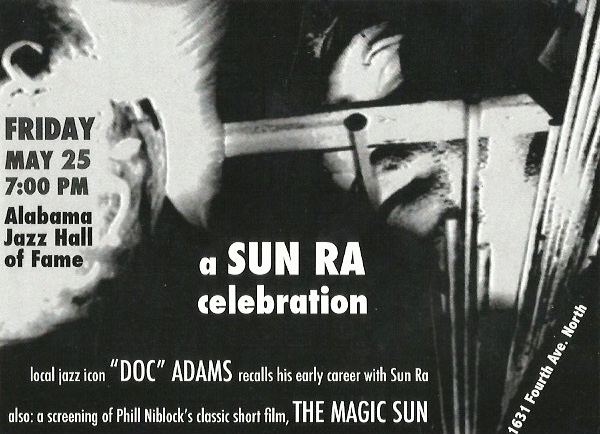
+ promotional materials for a series of Sun Ra Celebrations I hosted at the Alabama Jazz Hall of Fame

+ and a few other odds and ends

First, an excerpt from Doc: The Story of a Birmingham Jazz Man, my book with the late & beloved Dr. Frank Adams (University of Alabama Press, 2012). Doc played in Sun Ra’s (Sonny Blount’s) early Birmingham band, back in the 1940s, and a chapter of our book together—Chapter Five, “Outer Space”—deals with those days. In the two quick excerpts here, Doc describes a few impressions of the bandleader:

Sun Ra lived across the street from the old Terminal Station in this rickety, raggedy house: I mean, it was terrible.  But when you got in there, he was so full of what he was doing.  He really believed in this outer space thing, and he talked about it all the time.  He would say this was this and this was that, and he rehearsed, rehearsed, rehearsed, till his band was just a jewel—I mean, it was just a jewel—and he had people in his band that weren’t great readers of music, but they could catch on quick.  They had this complete musicianship about them.

I first heard, like most people in Birmingham, that there was this weird guy—there was always some talk about this fellow that lived near the Terminal Station, in this old, broken-down house.  That’s back in the early thirties, my elementary school days.  Nobody would say he was crazy, he just had a reputation for being different.  In certain neighborhoods they knew he had a tremendous band, and he was a bandleader that nobody knew where he came from.  He was just there.

In those days he was called Herman Blount, or “Sonny”: Sonny Blount.  And you just couldn’t figure him out.   Did he have a mother, or did he have a brother?  Everything was a mystery about him.  And we never heard of him eating any food—he survived on grapefruit.  He would go to Mr. Forbes’ music store, the biggest music store in town, and look through all the new music that would come out.  He would probably be eating on a grapefruit, and he’d take his pen out and a piece of manuscript paper and copy the music.  He’d stand there for maybe an hour, and drip grapefruit juice on the music and write it out in hand—he never would buy the music.  People would be standing back, waiting to be waited on, and, no, he wouldn’t move.  Mr. Forbes would stand and watch him.  When he finally got his music, he would say “Thank you” to the wall or something, and go on out.  And everybody understood that.

You would say, because it’s segregation and everything, “Why don’t they stop you from going in the store?”

He’d say, “They like me.”

“Why would they like you, when you’re messing everything up?”

“They understand.  That I’m a power.  And really,” he said, “we are friends.”

He thought about white people that way.  He said, “They are my brothers.  They are my brothers, but some of them don’t know it yet.”

[…]

Blount’s band was real unique.  Everybody in there couldn’t read music real well, but he could put them together: I admire Sonny for being able to mold his musicians together to do things that he did.  His orchestra would consist of maybe three trombones or five, it didn’t make any difference—he wanted to know how you sounded and how you sounded, and all that kind of thing.  If two bass players showed up, they were both on the job: he’d have two.  Some of the musicians might have complained, because they’d have to split the money more ways, but Sonny wanted to hear what each one of them could do: how it all sounded together.

As I said, he lived in this rickety old house, and his whole world was in that place.  It was a wooden frame building.  As far as we got, and anybody got, was the front room, and that was where he had his bed and where he rehearsed.  I think he took his meals in there.  We understand that he had a sister or somebody, but nobody ever saw anybody there in the house.  He would always be there, and he had these records stacked about five feet off the ground, these [78] records and all of those kinds of things, and he had his piano in there.  I remember that the hallway was about to fall in—you could step down in a hole or something if you weren’t careful—and the furniture was in shoddy shape.

Always it was very crowded.  I remember that whenever we had a singer, after he set the drums up, the singer would have to be out in the hallway, and he would call that person in whenever they would do a vocal number.  The saxophones would be up against the wall over here, and the trumpets would be somewhere back in there.  But you didn’t think about it.  There was never any talk about anything but the music.  He had a wire tape recorder, and he had a shortwave radio—I don’t know how he got it—and he could get music out of New York, like from the Savoy.  He would have all these wild players on there like Don Stovall or something, man.  They were playing bop before bop was even heard about!  He’d listen at night to that, and he’d play that back for you.  It was the craziest music, but he would say, “That man’s not crazy.  You just aren’t able to understand it yet.  He’s trying to tell you something, but you don’t know what to do.  He’s just trying to tell you he’s free—okay?  So listen at it.”  And if you listened long enough, you’d get it.

He would say he came from outer space—and, “I was born with x-ray ears; I can hear all these things you humans can’t hear yet.”

… For more, please check out our book, Doc.

*

Next, here’s a brief clip of Doc Adams at Spaceship Saturn’s tribute to Sun Ra at Birmingham’s Bottletree Cafe in 2013. Doc spoke briefly about his time with Sun Ra, then played the strangest solo set I ever heard him play. Finally he was joined onstage by SI Reasoning, LaDonna Smith, and Davey Williams, all seen here. Doc was utterly enchanted by the Bottletree that night.

*

Next, from 2014, my four-part series on Sun Ra’s Birmingham roots. “The Magic Citizen” was published in the local weekly Weld and is still available online at the links below.

Part One: Sun Ra in Birmingham

Part Two: Sonny Rising

Part Three: First Steps in Outer Space

Part Four: The Voyager Returns

This project developed out of my work with Doc Adams, and anticipates the book I’m working on now. One of the greatest thrills of writing this new book—which I swear is getting close to finished—is the chance to expand on this story and uncover important pieces of Sun Ra’s early years. So stay tuned.

*

From 2012 to 2014 I organized, with the Alabama Jazz Hall of Fame, an annual Sun Ra Celebration. The events were a mix of film, poetry, reminiscence, and live music. In 2013 we showed the great film, SUN RA: A JOYFUL NOISE, and I had the opportunity to interview the filmmaker, Robert Mugge, on my radio show, The Lost Child. Mugge gave a gracious, funny, and eye-opening interview, which I still remember very fondly. This episode of The Lost Child includes, besides our interview, a few short audio excerpts from the film, plus excerpts from Sun Ra’s 1988 show at Birmingham’s The Nick.

You can hear the episode here. (And find more of Robert Mugge’s work here.)

*

While I’m add it, I thought too that I’d dig up for today’s post some of the drawings, posters, and postcards I put together for those three events at the Jazz Hall of Fame.

So:

919478_10151436823046868_956338115_o
Drawing, 2014
Sun Ra Celebration 1 copy
Postcard, 2012
Sun Ra Celebration 2
Postcard, 2012
919525_10151442353896868_1022378145_o
Poster, 2014
247096_364541930318568_1912701301_n
Poster, 2014. Production photo still courtesy Robert Mugge (SUN RA: A JOYFUL NOISE)
10257938_510074502431976_8345529376732890750_o
Poster, 2014

*

Finally, the following items may be of some interest to Sun Ra fans and followers:

+ In 1989, Sun Ra came back to the Magic City to play Birmingham’s first City Stages festival. While in town he also played a show at Southern Dance Works. You can download the audio of this festive performance here. I recommend it.

+  Backing up: as a teenager, Sonny Blount played in the Ethel Harper orchestra. Harper was a teacher at Birmingham’s Industrial High School; when she left Birmingham to pursue her own career in entertainment, Sonny Blount took over the band. Recently on this blog I sought to shed some light on Ethel Harper’s story, drawing from her papers at the Morristown, New Jersey, library, and other sources. You can read part one of that story here. 

+ And here’s a couple of intriguing newspaper advertisements from Sonny Blount’s Birmingham years:

Okay, that’s it for now. But also this: as I compile these links I’m happily and heartily reminded of the many friends, artists, scholars, fans, concert-goers, filmmakers, musicians, writers, bootleggers, and others who’ve contributed a great deal to my own ongoing understanding of Sun Ra, his music, his mythos, and his bio. Thanks to one and all.

See you around.

*

Outer space is a pleasant place
A place that’s really free
There’s no limit to the things that you can do
There’s no limit to the things that you can be
Your thought is real
And your life is worthwhile

— Sun Ra, “Space is the Place”